

Lets Learn About Coffee
When we first decided to explore the world of coffee we had no idea how much variety there was and the sheer volume of information we would end up learning about. So much goes into making the perfect cup of coffee, from choosing the right bean to knowing the best method to brew each type of bean.
This guide is aimed at helping you to understand the basics of single origin coffee - and what that even means!
Lets talk about:
Speciality coffee
Roast style
Coffee origins
Process
Flavours & tasting notes
Brewing methods
To start off lets talk about the two main types of coffee; Arabica & Robusta.
Arabica beans are the good stuff, they're packed full of flavour and tend to score higher in taste tests.
Robusta beans are stronger & more resillient which means they can handle tougher growing conditions but the downside to this is that it has a negative impact on the flavour.
Here at Grounds for Adventure we want to make sure our customers only get the best so we only use Arabica beans
Speciality Coffee
So what is all the fuss about speciality coffee and who decides if a coffee is speciality?
The Speciality Coffee Association has a team of certified Q graders who use a technique called cupping to rate a coffee out of 100 based on factors such as aroma, mouthfeel and lots more.
If a coffee is scored 80 or above it is considered speciality coffee, anything lower than 80 is considered commodity coffee (the sort of stuff you get in the supermarket).
Here at Grounds for Adventure all the coffee beans we use are graded speciality.
We have two types of coffee;
Our single origin coffee which means when you enjoy your 'Brazilian' coffee you can be sure it comes from a specific farm and a specific plot of land not a mix of beans from all over Brazil.
We also have seasonal blends of coffee; we still use single origin beans but we mix 2 separate single origin beans together to make a special limited edition blend to complement the season or occasion.
Roast Style
Roast style refers to how dark the beans have been roasted which helps give you an idea of the flavour intensity to expect.
Our beans are roasted by a small family run roastery in Rutland; they have a talented artisan roaster who roasts in small batches to prevent inconsistent flavours which can easily happen if you roast in bulk.
We have 3 roast types:
light and fruity: ideal if you like clean sweet flavours like cranberry, pineapple or marzipan. These coffees are easy to drink as an Americano and are best suited to filter brewing in a cafetiere.
medium: often caramelised, and nutty in flavour. Versatile enough to be drank with or without milk. Ideal for brewing in an espresso machine, stove top or Aeropress.
medium/dark: bold flavours that are ideal for kickstarting your morning. Chocolatey tastes with caramel and zingy fruit notes. These coffees are best brewed in an espresso machine, stove top or Aeropress.
Each of our single origin coffees has 3 coffee beans next to it, the more coffee beans coloured in the darker the roast.

Coffee Origins

Where coffee is grown has a big impact on how it tastes; here at Grounds for Adventure we source our beans from the 'coffee belt' - the coffee belt runs horizontally spanning 25 degrees north and 30 degrees south of the equator. It provides perfect growing conditions for arabica coffee plants.
South America: Brazil, Columbia, Ecuador, Peru, Bolivia
Central America: Mexico, Guatemala, Nicaragua, Honduras, Jamacia
Africa: Kenya, Ethiopia, Uganda, Rwanda, Tanzania
Every coffee-producing country has something unique to offer, and that's reflected in the flavours found in the cup. Different bean varieties, combined with local growing conditions like climate, altitude, and soil quality, give each origin its own distinct personality.
That's also why we're such big fans of single-origin coffees. When beans are sourced from one place, they share the same growing environment, resulting in a more consistent flavour experience from batch to batch.
Growing conditions influence taste in the following ways:
Soil quality: seeing as the beans are found inside the cherries of a coffee plant the soil they grow in is super important. If the soil is deficient in nutrients then the plant will not thrive and then the flavours wont develop. That's why we aim to try and get our beans from nutrient-rich volcanic soil or treated with organic fertilisers.
Altitude: Arabica coffee grows really well at high altitude as it has a slower growth rate, this means the cherries ripen slowly over time resulting in the beans having a higher infusion of flavours. Higher altitude also means a cooler climate so there is fewer pests and disease to affect the plants.
Temperature/Climate: Arabica coffee plants prefer a mild but cooler climate of around 18-20 degrees celsius. Too hot and the cherries ripen too fast reducing the quality of the bean inside and too cold means poor yield.
Most countries have two harvests a year but due to Arabica coffee being sensitive to changes in it's environment no two harvests of the same plant are ever exactly the same. For our regular regular all year round single origin coffee's we ensure the roast style and flavours remain consistent
Process
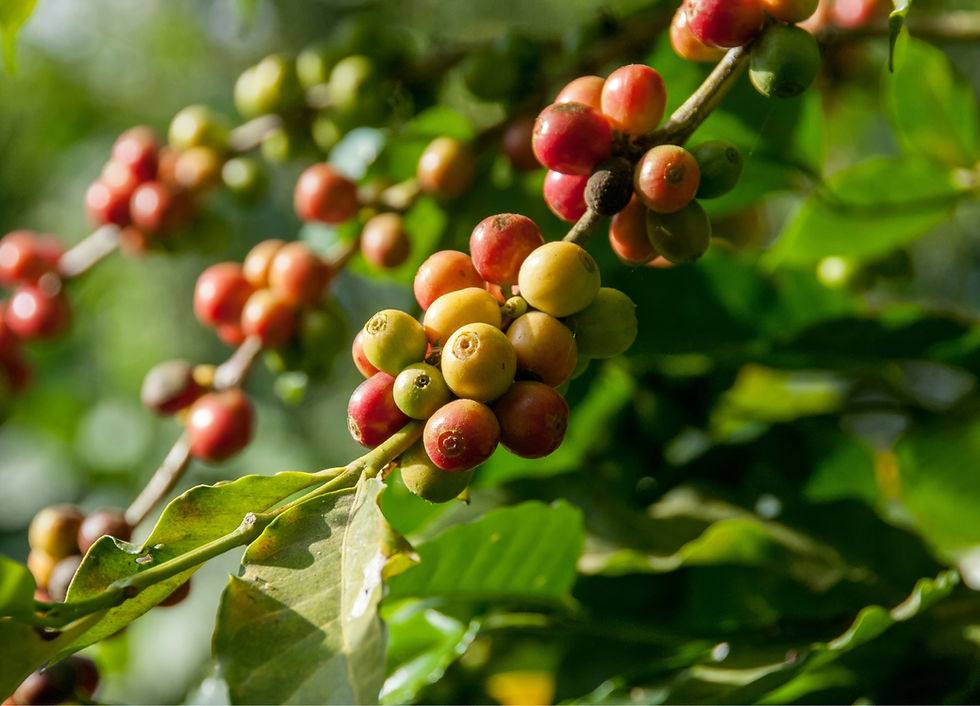
Coffee beans are actually the seed from inside the cherries that grow on coffee plants. There are two main methods on how the seed's are removed from the cherry flesh; 'washed' and 'natural'. Sometimes a combination of both these methods is used and is referred to
as 'honey' or anaerobic. Each extraction method gives slightly different flavours in your final brew so lets look at the differences.
Washed: the most popular way to process coffee as it offers clean well-balanced flavours in your cup. This process involves removing the beans from the cherries straight after harvesting, the beans are then put into large tanks filled with water for 12-27 hours before being removed, washed and then spread out on large beds in the sun to dry.

Natural: this is the traditional method; farmers leave the whole cherries to dry out before removing the beans. This allows the flavours in the fruit flesh to naturally infuse with the bean which can produce some pretty eccentric flavours (but in a good way!).
Honey: also known as 'pulped natural' this is a combination of washed and natural processing. The beans are de-pulped from the cherries with most but not all of the flesh being removed, the beans are then placed straight out onto patios to dry in the sun before being hulled and packed. This process creates a fuller, rounder mouthfeel and ensures a nice balance between sweet, floral and fruity flavours.
Anaerobic fermentation: this is a new experimentation process in which the cherries are placed in large oxygen-free tanks and left to ferment for anything from a few hours to several days. The result is bold fruity flavours which can be quite surprising, offering hints of tropical or even boozy notes!
Flavour & Tasting Notes

So when we talk about flavour notes in our coffee's you might be wondering if we add flavouring or syrups. We absolutely dont add anything it's all down to the skills of the artisan roaster at the roastery - his a very clever guy!
So what are the amazing natural flavours - if you like a sweet fruity coffee then a light blend is right up your street. If you like a coffee with a bit more personality then a medium coffee is for you; but if your into strong and bold flavours you need to be going for a medium-dark coffee.
Below gives you an idea of the sorts of tasting notes you might expect in the differing coffees:
Light & fruity: Marzipan, Butterscotch, Tropical fruits, Strawberry, Orange
Medium: Vanilla, Plum, Cherry, Almond, Hazlenut
Medium-Dark: Caramel, Dates, Lemon's, Apple, Toffee
Brewing Methods
The flavour of your coffee can change purely by the way you brew it - crazy I know!
If you take a light & fruity coffee and brew it in your espresso machine it may come out tasting a bit more acidic than you would like. To help you navigate this minefield we've put together a chart to help you decide what brewing method is best suited for the coffee you decide to brew
Light & Fruity: Cafetiere & filter
Medium: Cafetiere, Espresso machine, stove top, aeropress
Medium-dark: Espresso machine, stove top, aeropress
Not sure how to brew your coffee? Click the link below to visit our page dedicated to explaining how to brew coffee using all the different methods!
